Ask a Gold Coast property manager what eats their week and you'll rarely hear "leasing". You'll hear maintenance. A tenant emails about a dripping tap, texts a photo of a water stain, then rings the office on Monday because nobody replied. Multiply that across a rent roll of 200 or 300 doors and a big part of every day goes on reading, sorting and chasing before a single tradie is booked.
Maintenance triage is one of the most practical places to put AI to work in a property management team. Not because AI can fix a hot water system, but because most of the effort is admin that follows a predictable pattern.
Where the hours actually go
Before anything gets fixed, someone has to:
- Work out which property and tenancy the request belongs to
- Decide whether it's an emergency, routine, or not the owner's responsibility at all
- Ask for the photos and details that weren't included
- Check the owner's approval limit and preferred trades
- Log it in your property management software and update the tenant
None of that is hard. It's just relentless, and it lands at the worst times. Requests pile up overnight and on weekends, and Monday starts with an inbox clean-up instead of actual property management.
What an AI triage system does well
A well-built system sits between the tenant and your team and handles the first pass:
- Captures the request properly. It replies to the tenant within minutes, asks for photos, where in the property the issue is and when it started, and matches the request to the right tenancy.
- Sorts by urgency. It flags anything that looks like an emergency repair under Queensland tenancy rules, such as a burst water service, gas leak, serious roof leak or failed hot water system, so it goes straight to your on-call process. Routine items wait in a tidy queue.
- Drafts the next step. For routine jobs it prepares a work order with the right trade, the owner's approval limit and the tenant's access notes, ready for a property manager to approve.
- Keeps everyone informed. Tenants get honest status updates, and your team gets a morning summary instead of forty scattered emails.
The property manager still makes the calls. They just start with a sorted, complete list rather than a pile of raw messages.
The lines we never let AI cross
This is where DIY setups tend to go wrong. An AI that can approve spend, promise a repair date or tell a tenant they're responsible for damage is a liability, not a time saver.
In the systems we build:
- Spend needs a human. AI drafts work orders, a person approves them, and owner limits are always respected.
- Emergencies mean a phone call. Anything safety-related triggers your existing after-hours process, not a chat reply.
- No legal opinions. Questions about bond, breach or who pays go to a property manager, and the AI stays neutral until then.
- Your data stays yours. Tenant details and photos live in accounts you control, with a clear answer on where data is stored, in line with Australian privacy expectations.
One honest constraint: AI will sometimes misread a vague message. That's why good triage is set up to flag uncertainty rather than guess, and why the first few weeks after go-live include a tuning period where your team corrects its calls and the system learns your patterns.
What Monday looks like instead
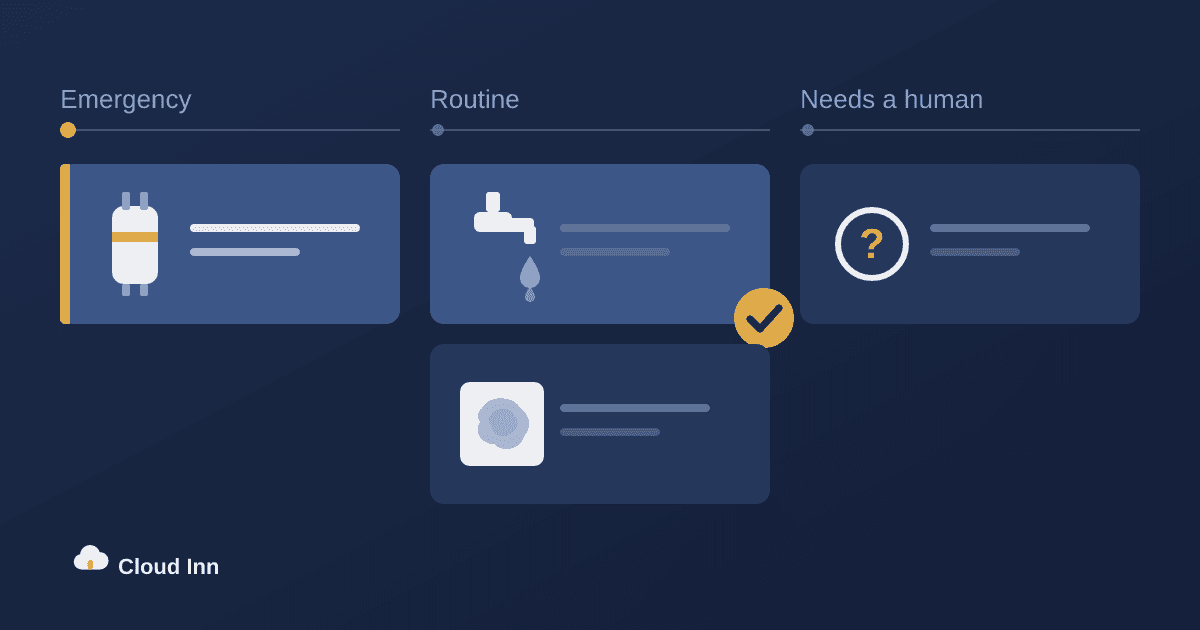
Instead of opening the inbox to a weekend of unsorted messages, a property manager sees something like this: two emergency repairs already escalated and handled through the on-call trade, nine routine requests with photos attached and draft work orders waiting for approval, and three items marked "needs a human" because they touch responsibility or cost.
Approving the routine jobs takes minutes. The time saved goes back into owner relationships, routine inspections and growing the rent roll.
Is maintenance triage the right first system?
For many property management teams, yes. It's high volume, mostly rule-based and painful enough that the payoff shows up quickly. For sales-led agencies, after-hours enquiry handling is often the better first move. If you're not sure which leak is costing you most, an AI Opportunity Audit maps it out before you spend real money.
At Cloud Inn we design, build and run practical AI systems for agencies and other local businesses without an IT department, on fixed fees and with human oversight by design. Book a 30-minute call and we'll talk through whether maintenance triage is the right place to start for your team.