Saturday on the Gold Coast is a marathon for most agents. Four or five open homes back to back, a clipboard or sign-in app full of names, a couple of buyers who were clearly keen, and a car full of brochures. Then Sunday arrives, then Monday's listing appointment, and by Tuesday half of those buyers have heard nothing.
Nobody means to drop them. The follow-up just competes with everything else, and it usually loses. Meanwhile a buyer who walked through three properties that weekend remembers the agent who got back to them first, with the right answer.
This is one of the most practical places for a real estate agency to use AI. Not to replace the agent, but to make sure every person who walked through the door gets a timely, useful follow-up.
Where open home leads go cold
When we look at how agencies across South East Queensland handle open homes, the same gaps keep showing up:
- Same-day silence. Buyers are most engaged on the day of the inspection. A reply on Wednesday feels like an afterthought.
- Generic messages. "Thanks for coming, let me know if you have questions" doesn't help anyone decide anything.
- Lost questions. A buyer asks about body corporate fees or the pool certificate at the door, and the answer lives in the agent's head until it's forgotten.
- No sorting. The serious buyer, the neighbour having a look and the investor comparing ten suburbs all get the same treatment, or none.
- CRM gaps. Names go into the sign-in sheet but never make it into the CRM with useful notes, so the next listing campaign starts cold.
None of this is a skill problem. Good agents know exactly what they'd say. They just don't have the hours on a Saturday night.
What a sensible AI setup does
A well-built follow-up system is narrow on purpose. It does a few repetitive jobs reliably:
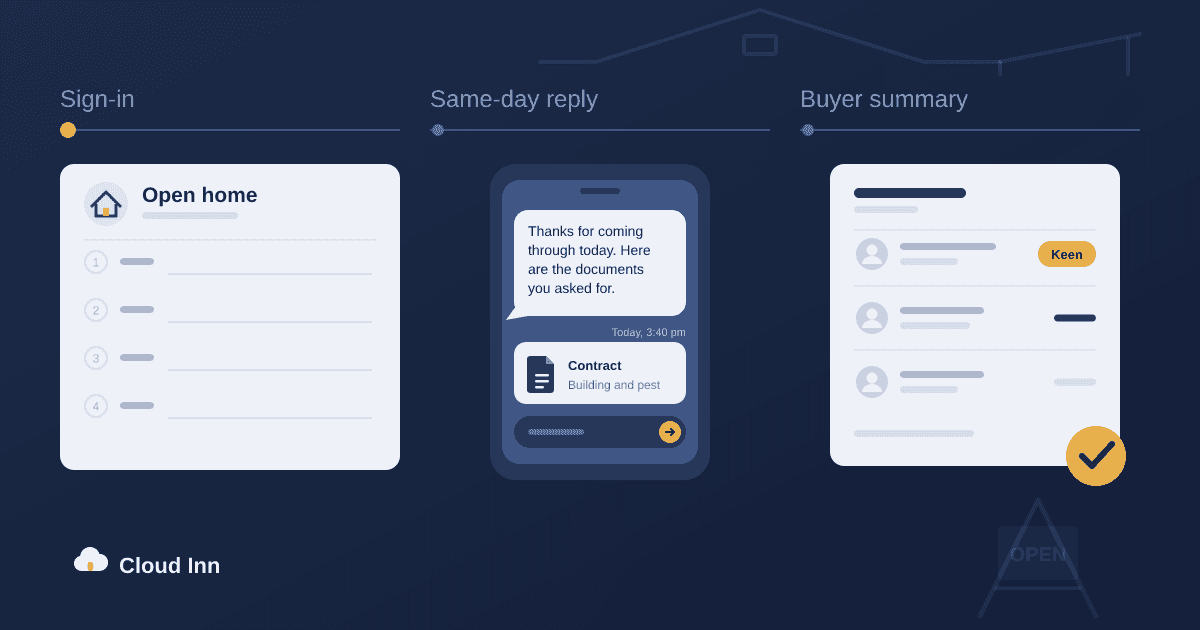
- Sends a same-day thank you. A short, friendly message within a few hours of the open home, from the agency's own number or email, with the property details attached.
- Shares the right documents. Contract, building and pest reports, rates and body corporate information, sent on request rather than buried in a portal.
- Captures the questions. Buyers can reply with questions, and the system logs each one against the property so nothing gets lost.
- Drafts answers for the agent. Using your listing information, it drafts replies to common questions. The agent checks them and sends.
- Sorts buyers by intent. It flags people who ask about contracts, finance or a second inspection, so the agent's first calls on Monday go to the warmest buyers.
- Updates the CRM. Every contact, question and note lands in your existing system, ready for the next campaign.
At the end of the weekend the agent gets one tidy summary: who came through, who's keen, what they asked and which replies are waiting for approval.
What we never let AI do
Real estate runs on trust and regulation, so the guardrails matter.
- No price guidance without the agent. Anything about price, offers or the vendor's position goes to a person.
- No negotiation. The system never makes or responds to offers.
- No legal or finance advice. Contract terms, cooling-off periods and lending questions are routed to the agent, solicitor or broker.
- Honest about automation. Buyers are told when they're talking to an automated assistant, and can always ask for the agent directly.
- Privacy by design. Contact details stay in accounts the agency owns, and people can opt out easily, in line with Australian privacy and spam rules.
We've written before about the hidden risks of DIY AI. A chatbot that guesses at a price range or a contract detail can cost far more than a slow reply.
What it looks like in a real week
Picture a small Gold Coast agency with three sales agents. Before, open home follow-up depended on who had energy left on Saturday night. Some buyers got a call, many got nothing, and questions were answered days later.
With a simple follow-up system in place, every attendee hears back the same day, documents go out on request, and agents start Monday with a short list of the buyers worth calling first. Fewer warm leads slip through, and the vendor gets a clearer picture of genuine interest.
Is this the right place to start?
For many agencies, yes. Open homes happen every week, the volume is predictable and the results are easy to see: faster replies, more second inspections and cleaner CRM data.
If you're weighing this against maintenance triage for your property management team or other ideas from what AI can actually do for a real estate agency, an AI Opportunity Audit helps you find where the real time and leads are leaking first.
At Cloud Inn we design, build and run practical AI systems for real estate agencies and other local businesses without an IT department, on fixed fees and with human oversight by design. Book a 30-minute call and we'll talk through whether open home follow-up is the right first step for your agency.